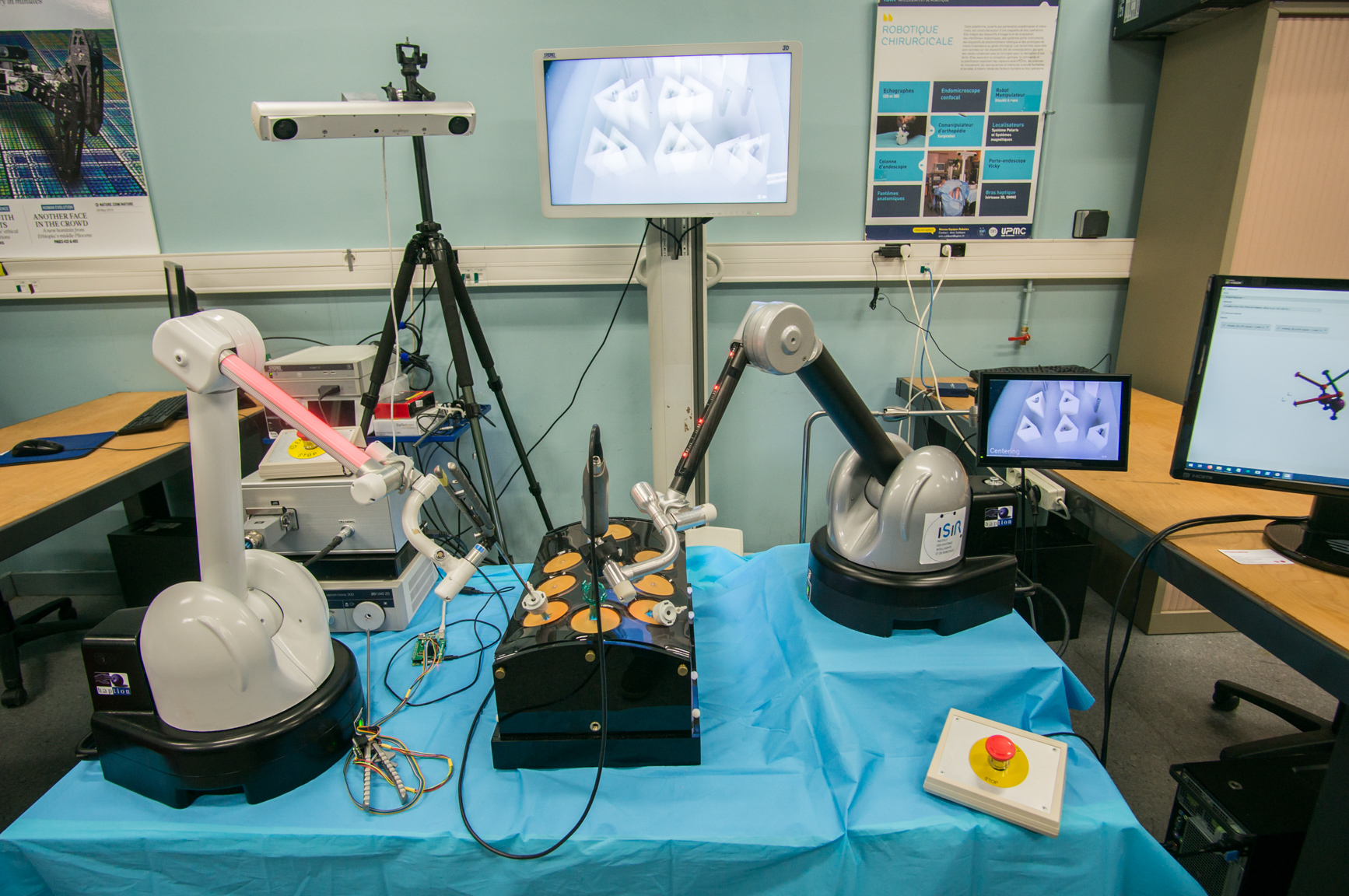
In this project, we propose to work to facilitate gestures in minimally invasive surgery by addressing more particularly the questions of interfaces and human-machine interactions.
Modular interfaces to facilitate minimally invasive surgery
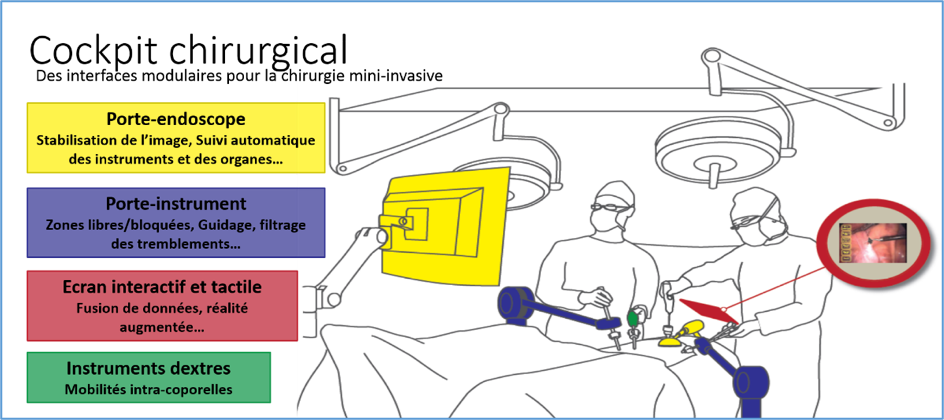
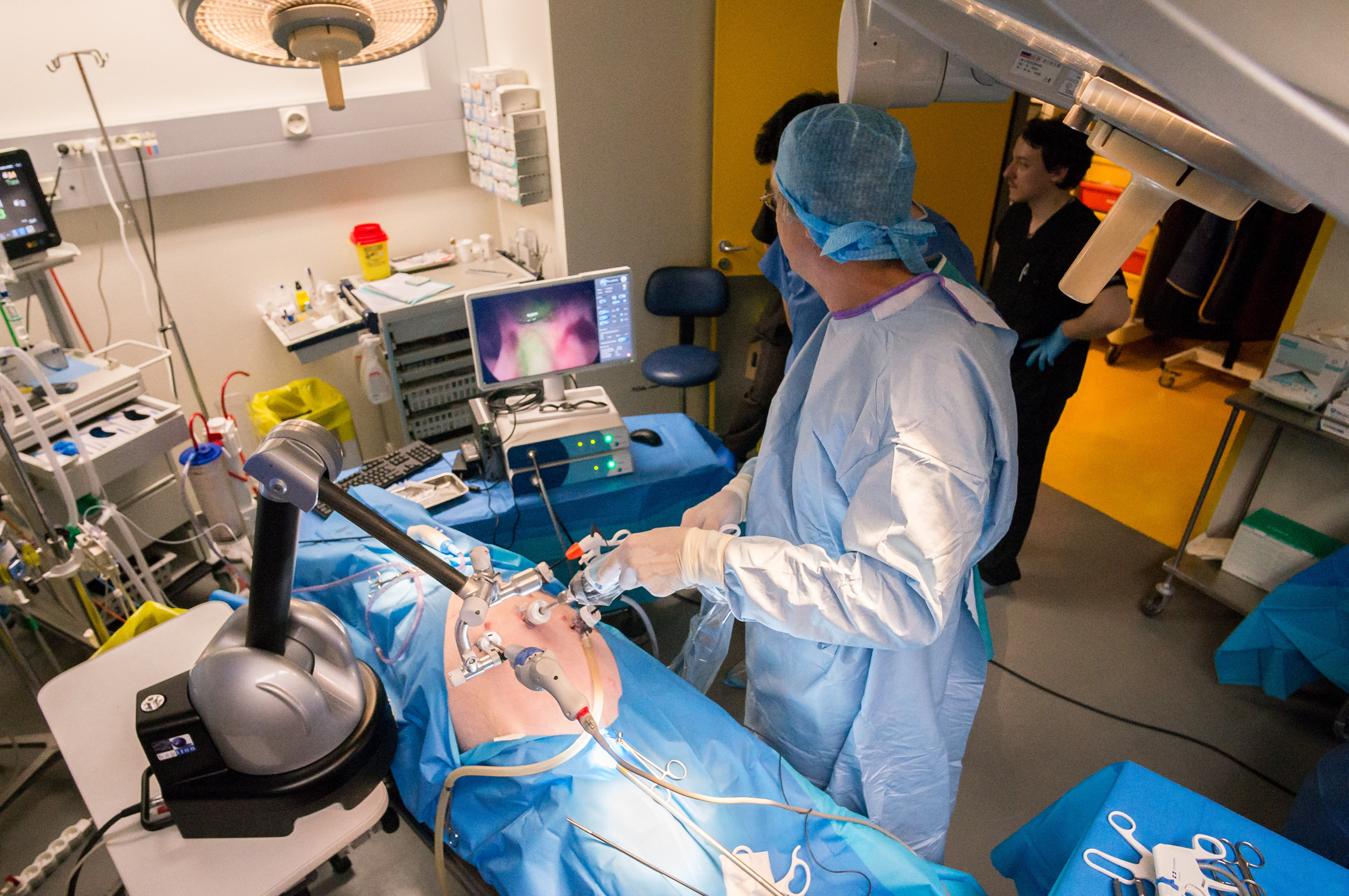
These modules are designed to be fully integrated into the care pathway and current practice. For this, we particularly address the issue of interfaces and surgeon-machine interactions.
The main research topics are:
– The control of comanipulated instrument-holder robots for gesture assistance (virtual guides),
– Augmented reality (display and manipulation of virtual objects in a real scene, tangible interfaces),
– Surgeon-machine interactions (change of command mode, analysis of learning traces),
– Operating room interactions (observations, interviews, protocols).
The context
Ambulatory surgery allows patients to return home the same day as their operation. This surgery brings many benefits to patients and health professionals alike, in terms of quality of care and organization. Minimally invasive surgery is one of the techniques that allow patients to have a reduced hospitalization time or even to be treated as outpatients.
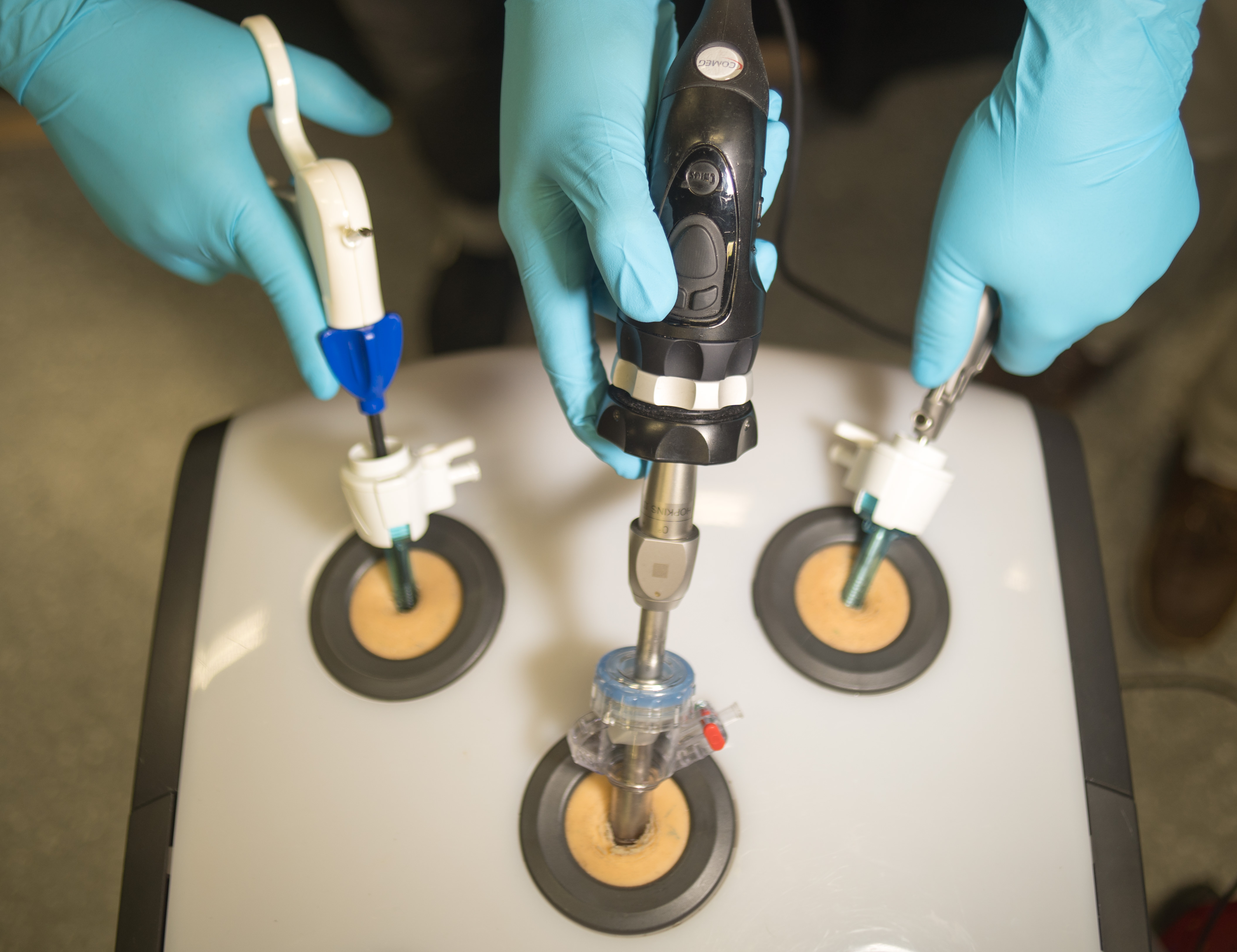
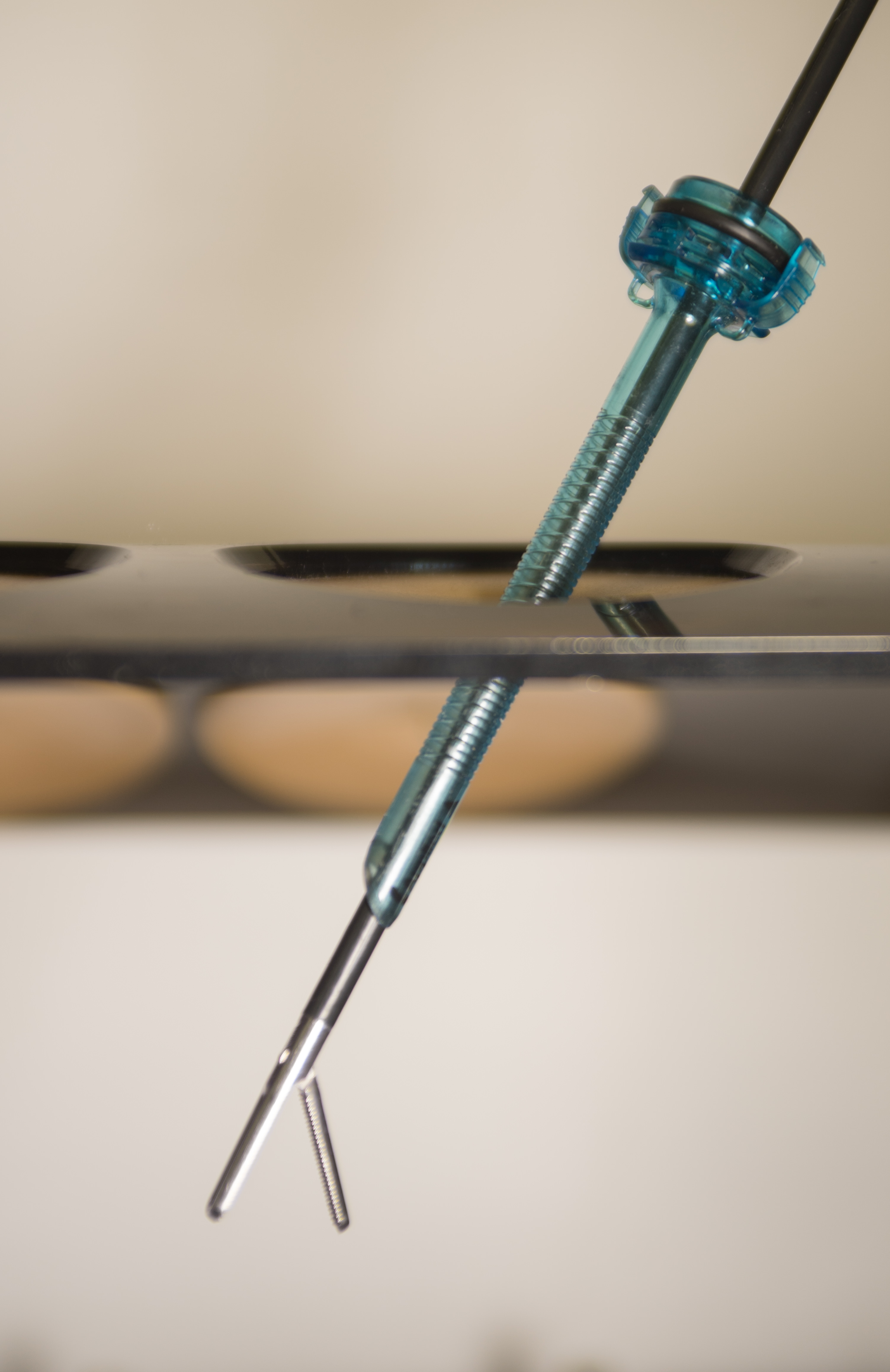
The surgeon makes small incisions (a few millimeters) that allow the introduction of a camera and operating instruments. The handling of the instruments of minimally invasive surgery is complicated and demanding for the surgeon: dexterity is reduced, the field of vision is limited, the perception of the efforts between the organs and the instruments is considerably degraded. All these factors lead to the fact that minimally invasive surgery is underused in clinical practice.
Objectives
The main objective of this project is to democratize minimally invasive surgery by offering surgeons different technological modules that can be combined together. The aim is to assist the surgeon by facilitating the gestures and the perception of the organs so that he operates in a minimally invasive way as easily as in open surgery.
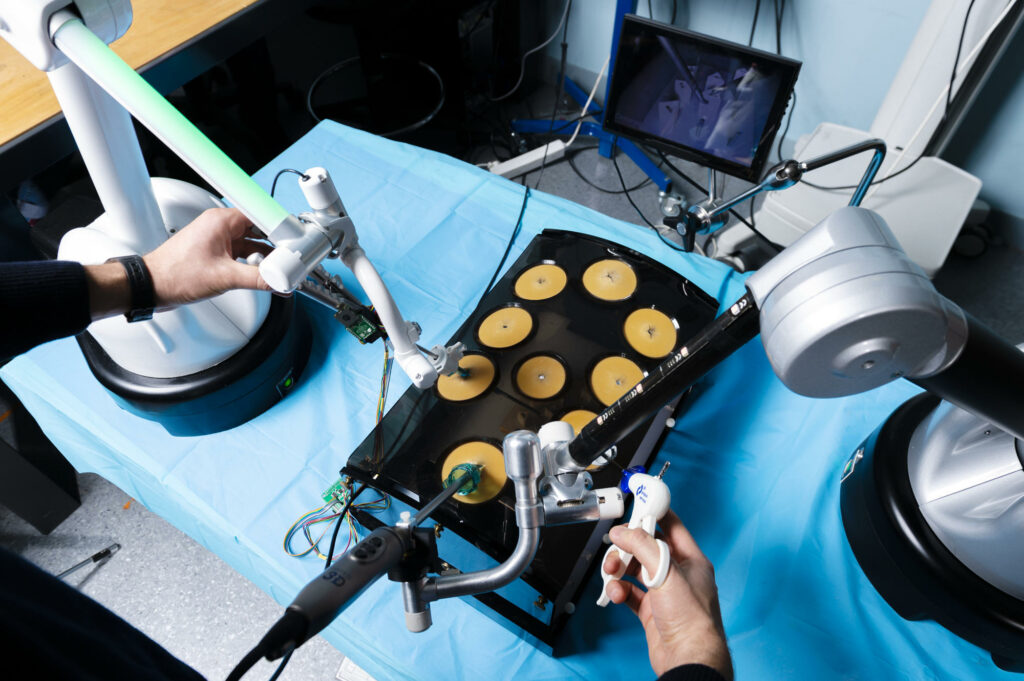
Dans ce projet, nous proposons de travailler à faciliter les gestes en chirurgie mini-invasive en abordant plus particulièrement les questions des interfaces et des interactions homme-machine.
Des interfaces modulaires pour faciliter la chirurgie mini-invasive
Ces modules sont conçus pour s’intégrer pleinement dans le parcours de soin et la pratique courante. Pour cela nous adressons tout particulièrement la question des interfaces et des interactions Chirurgien-Machine.
Les principaux thèmes de recherche portent sur :
– La commande de robots porte-instruments comanipulé pour l’assistance aux gestes (guides virtuels),
– La réalité augmentée (affichage et manipulation des objets virtuels dans une scène réelle, interfaces tangibles),
– Les interactions chirurgien-machine (changement de mode de commande, analyse de traces d’apprentissage),
– Les interactions au bloc opératoire (observations, entretiens, protocoles).
Le contexte
La chirurgie ambulatoire permet au patient de regagner son domicile le jour même de son intervention. Cette chirurgie apporte de nombreux bénéfices aux patients comme aux professionnels de santé, en termes de qualité des soins et d’organisation. La chirurgie dite « mini-invasive » est l’une des techniques permettant aux patients d’avoir un temps d’hospitalisation réduit voire d’être pris en charge en ambulatoire.
Le chirurgien pratique de petites incisions (quelques millimètres) qui permettent l’introduction d’une caméra et des instruments opératoires. La manipulation des instruments de chirurgie mini-invasive est compliquée et éprouvante pour le chirurgien : la dextérité est réduite, le champ de vision est limité, la perception des efforts entre les organes et les instruments est considérablement dégradée. Tous ces facteurs conduisent à ce que la chirurgie mini-invasive est sous utilisée dans la pratique clinique.
Les objectifs
L’objectif principal de ce projet est de démocratiser la chirurgie mini-invasive en proposant aux chirurgiens différents modules technologiques combinables entre eux. Il s’agit d’assister le chirurgien en facilitant les gestes et la perception des organes pour qu’il opère de façon mini-invasive aussi facilement qu’en chirurgie ouverte.