The study examined the emotions that listening to sounds produced by organic (i.e., real) affective tactile gestures (e.g., arm stroking, cheek caressing), presented in isolation, elicited in people not involved in the gestures. The study was motivated by the ever-increasing lack of engagement in interpersonal touch, in large part due to the digitalization of the human experience. This decrease in touch has been shown to have detrimental effects on individuals and deprives them (both touchers and touchees) of the numerous benefits of affective touch, including emotional regulation. As such, it becomes highly relevant to investigate alternative ways to convey the benefits of affective touch, such as through different tactile modalities. Here, sound is an interesting option given the close relationship between auditory and tactile waves.
The context
The study is part of the broad ANR MATCH project on Audio-Touch. It expands on the first study of said project by investigating the emotional responses to affective touch sounds beyond mere identification and by examining the influence of meaning and prior expectations about what affective touch sounds are like.
Objectives
The main objective of the study is to examine the emotional space of auditory cues produced by organic affective touch, in isolation, and the dimensions that influence it. Can these sounds evoke positive emotions? Are there variables that enhance these emotions? To this end, we conducted five experiments to disentangle the emotional responses to organic affective touch and the key variables that influence them.
Here, we extracted the auditory cues generated by organic affective tactile gestures, recruiting 14 romantically engaged couples and the tactile gestures they typically engage in, resulting in a wide variety of affective touch sounds. The objective of using organic gestures, rather than predefined recipe-like ones, was to more effectively evaluate the psychological processing of affective touch and its multisensory cues, and to capture its nuances.
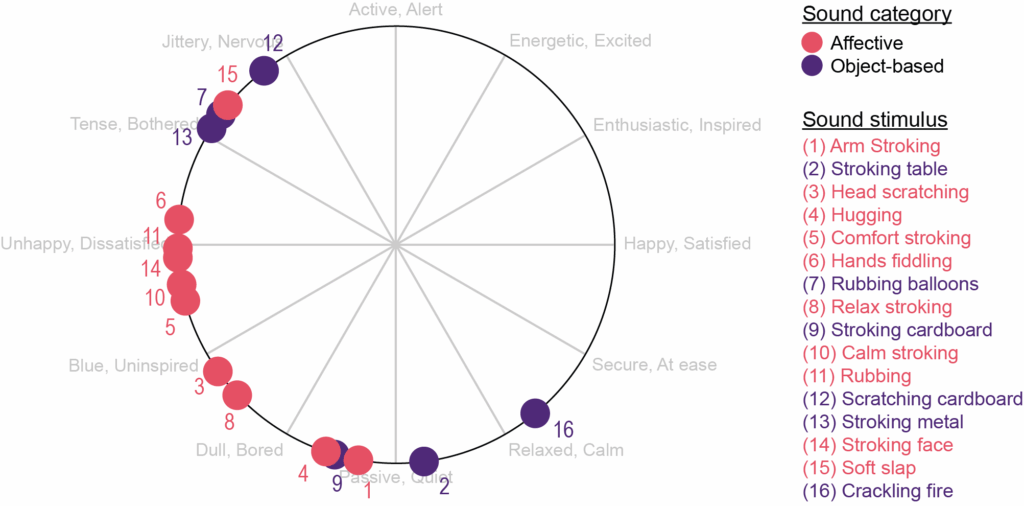
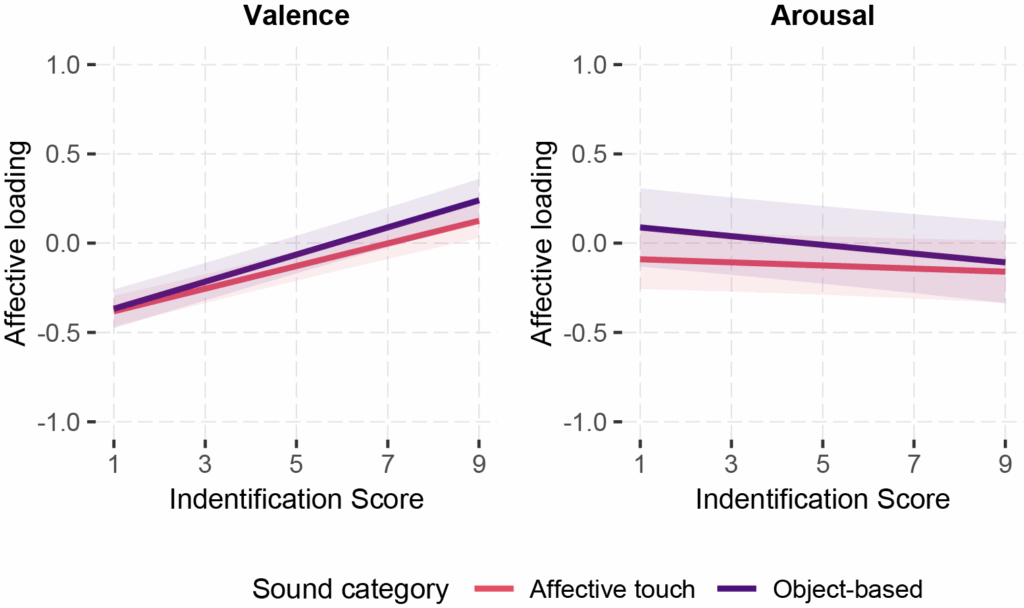
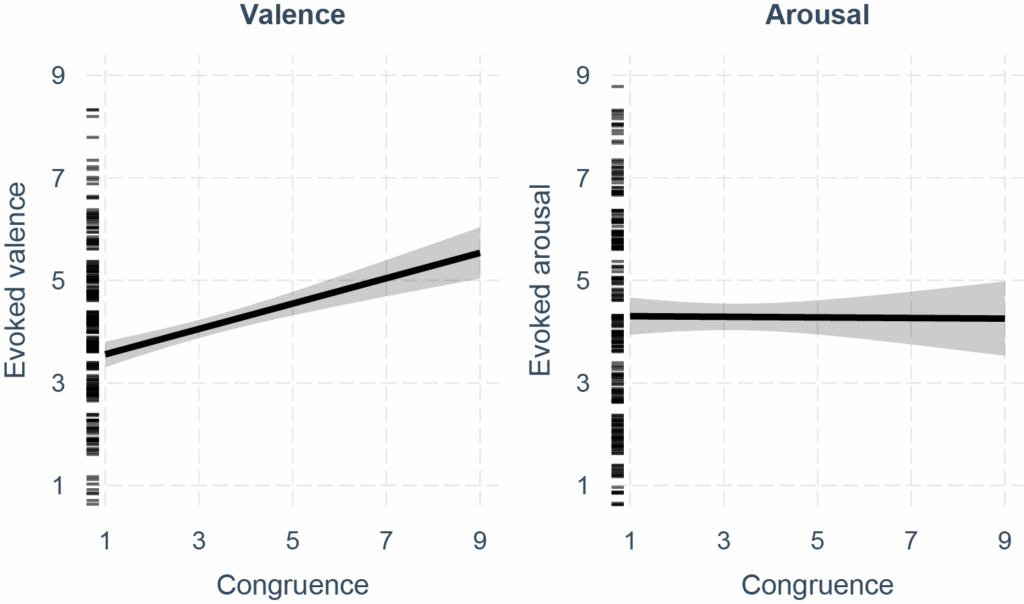
The results
Overall, we found that the sounds of affective touch alone elicited emotional responses with reduced positivity and marginally elevated arousal, and that individuals have a limited ability to identify affective touch in auditory cues. Importantly, we found that meaning matters. Explicitly framing the sounds as organic affective touch, rather than providing no context or framing them as object-based interactions, increases the valence they evoke. Furthermore, the more the sounds matched what individuals preliminarily expected affective touch sounds to be like, the higher the valence elicited by the sounds was, although people have limited knowledge and expectations of affective touch sounds. Our study is the first to examine the emotional space of the auditory dimension of affective touch, which, by itself, is a nascent field with intriguing opportunities.
From a practical perspective, our findings can be applied to enhance the emotional responses to non-tactile stimuli in the context of interpersonal interactions. For instance, imagine the narration of an emotional story that includes affective tactile interactions between the characters. The sounds of organic touch may be used to enhance the emotions the story aims to convey with these interactions. An additional possibility is the enhancement of the emotional responses to digital interactions with human and non-human agents (e.g., robots, anthropomorphized AI agents). However, it is important to note that more research on multisensory touch and its applications is needed.
Partnerships and collaborations
The study is part of the ANR Match project, in which we are collaborating with Catherine Pelachaud (ISIR), Ouriel Grynszpan (Paris-Saclay University), and Indira Thouvenin (UTC Compiègne). We also collaborated with the INSEAD-Sorbonne University Behavioural Lab, which supported us in recruiting the 14 couples and provided the physical facilities for recording the experimental stimuli.