In an increasingly digital world, we are seeing a steady decline in interpersonal touch. However, affective touch, such as a caress, a light touch, or gentle contact, plays an essential role in our emotional well-being and affective regulation. Its gradual decline is not without consequences: it deprives individuals of recognised benefits, particularly emotional regulation, both for those who touch and those who are touched.
It is in this context that a recent study was conducted as part of the ANR MATCH Audio-Touch project, led by a consortium of researchers from ISIR – Sorbonne University and Paris-Saclay University. This work, led by Francisco Barbosa Escobar, postdoctoral researcher at ISIR, and Malika Auvray, CNRS research director at ISIR, has been published in Springer Nature’s Psychological Research journal under the title “The emotional responses to the sounds of organic affective tactile gestures” .
The project explores an original question: what if sound could, in part, convey the emotional effects of affective touch?
Sound as a sensory substitute for affective touch
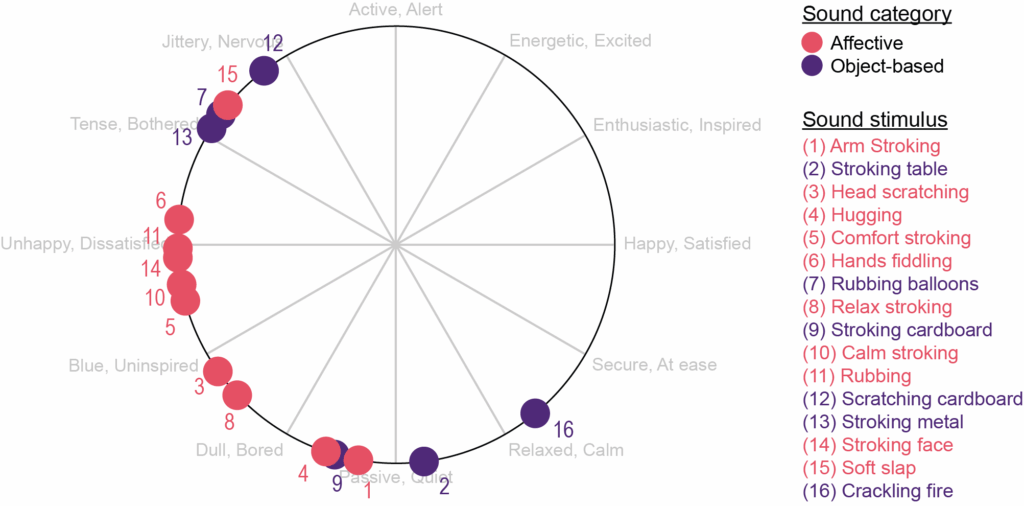
The study focuses on the emotions aroused by listening to sounds produced by real affective tactile gestures, such as a caress on the forearm or a touch on the cheek. These sounds were recorded during spontaneous interactions between partners in romantic relationships, then presented in isolation to other participants, without physical contact or associated images.
The choice of sound as an alternative modality is not insignificant: sound and tactile waves share similar physical properties, making them a promising means of transmitting, at least partially, the benefits of affective touch. This study thus extends the first phase of the MATCH project by going beyond the simple recognition of the sounds of affective touch to examine their emotional impact and the influence of the listeners’ meaning and expectations.
Understanding the emotional space of sounds produced by affective touch
The main objective of the study was to examine the emotional space of sounds produced by organic affective touch when heard alone. The research team asked themselves: Can these sounds elicit positive emotions? What variables influence these emotions?
To answer these questions, five experiments were conducted to dissociate the emotional responses associated with affective touch and identify the factors that modulate them. The sounds were extracted from recordings made with 14 couples, favouring spontaneous rather than standardised tactile gestures in order to assess the psychological processing of affective touch and its multisensory cues more ecologically and to capture their nuances.
Promising prospects for human, digital and robotic interactions
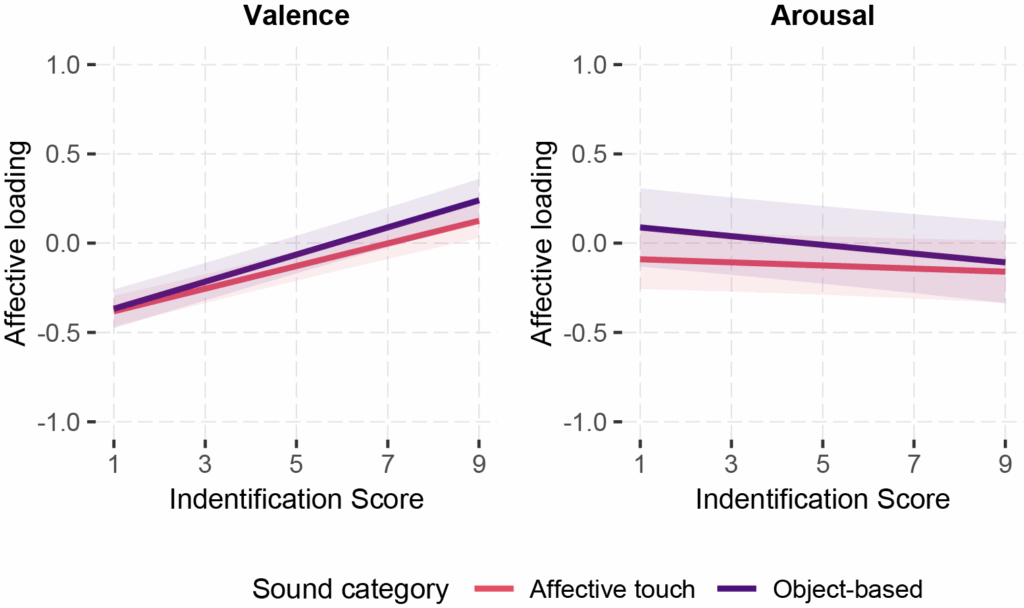
The results show that the sounds of affective touch, taken in isolation, elicit slightly positive emotions overall, and that participants have a limited ability to correctly identify these gestures based on sound alone.
However, one major finding stands out: the meaning attributed to the sounds matters greatly.
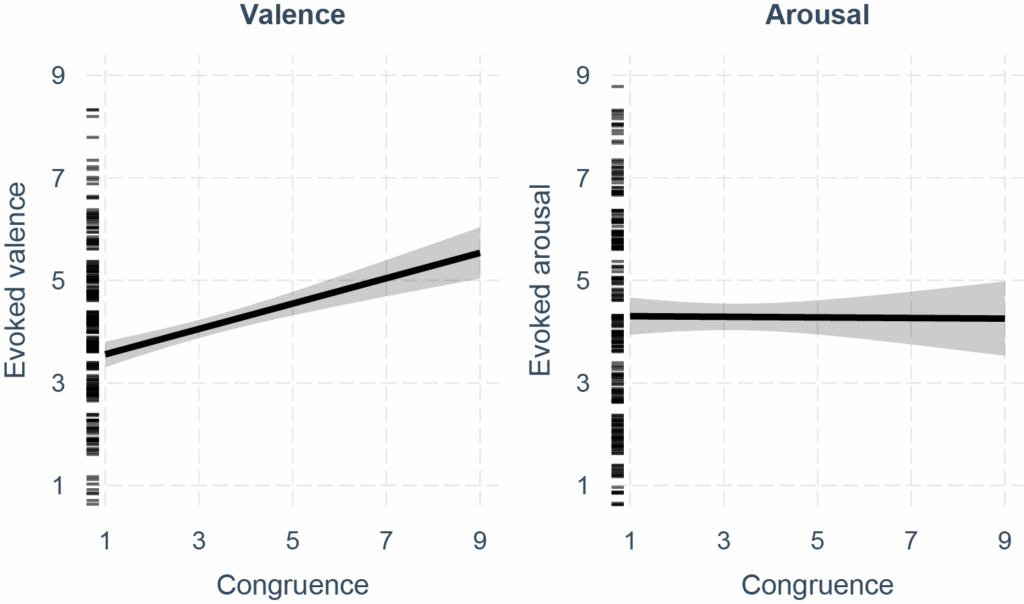
When participants are informed that the sounds come from affective touch gestures, the emotional valence they experience increases compared to situations without context or presented as interactions with objects. Furthermore, the more a sound matches individuals’ prior expectations of what an affective touch sound ‘should’ be, the higher the positive emotion experienced, even if these expectations remain generally vague.
This study is the first to map the auditory emotional dimension of affectionate touch, opening up a field of research that is still emerging but rich in promise.
Beyond their fundamental contributions, these results open up promising avenues for strengthening emotional responses to non-tactile stimuli in interpersonal interactions. The sounds of affective touch could, for example, reinforce the emotional impact of stories, audiovisual content or digital interactions involving social relationships. They could also enrich interactions with virtual agents, robots or anthropomorphised AI systems by adding an additional emotional dimension that is non-tactile but evocative.
This research is fully in line with ISIR’s themes, at the heart of its work on social touch, sensory multimodality and human-machine interactions. It is based on close collaboration between researchers Malika Auvray and Catherine Pelachaud, and builds on momentum already generated by other projects, including a CIFRE thesis with the company Humans Matter. The long-term goal is to explore how the sounds of touch can facilitate and improve our interactions, whether human, virtual or robotic.
Scientific contact: Francisco Barbosa Escobar, Postdoctoral Researcher, and Malika Auvray, Director of Research
Published on 26/01/2026