Join our workshop to explore state-of-the-art and new research methodologies at the edge between control and sim-to-real transfer.
– “Sim2Real and Classical Control Workshop”, at IROS 2026, at Pittsburgh
– Date of the workshop: 1 October 2026
About the Workshop
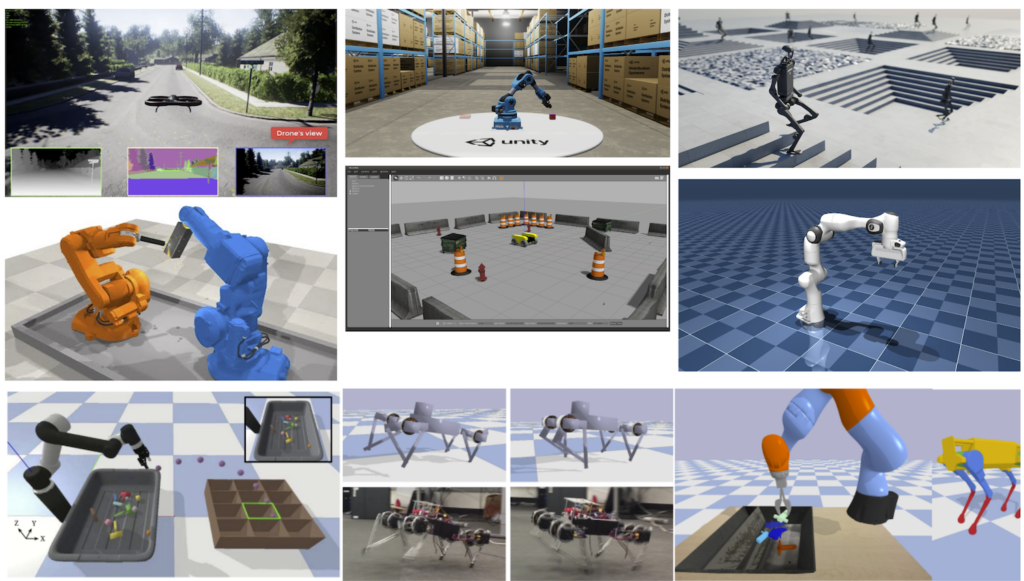
Simulation has long been a valuable tool for robotics, but its role is fundamentally shifting. Simulators are now integrated components of deployment pipelines, not merely prototyping aids. This shift, embodied in sim-to-real transfer, is rapidly redefining how robots are designed and validated at scale.
Yet the simulation-reality gap remains one of the most unsolved problems in modern robotics. The community is responding by exploiting real-world data to refine simulators through real-to-sim techniques. Together, sim-to-real and real-to-sim form a closed-loop framework that extends the classical foundations of system identification and adaptive control , fields with decades of rigorous theory that both communities have every reason to build upon. Two forms of fragmentation currently limit collective progress. First, model-driven and data-driven researchers often work in isolation. Second, system identification, adaptive control, and sim-to-real are treated as competing paradigms rather than complementary instruments facing the same problem.
In this context, this full-day workshop makes a targeted intervention across IROS’s core tracks, namely control, learning, and perception, with four concrete objectives: first, consolidate fragmented knowledge across communities; second, align research directions between control and learning communities; third, facilitate translation of academic advances into real-world deployment, and fourth, promoting inter-generational exchange between speakers from academia and industry, students, early-career researchers, and engineers.
Unlike prior events that have addressed sim-to-real at the application layer, this workshop treats it as a foundational methodological problem approached through the lens of control theory, a framing that so far has remained absent from the conference landscape.
Call for Contributions :
– Early Submission: June 20, 2026 (priority consideration)
– Final Submission: August 20, 2026 (last call – all paper types welcome)
We invite researchers and practitioners in mobile robotics, manipulation, sim-to-real transfer to contribute to our workshop by submitting a two-page paper (excluding references) in IROS format as a PDF (Guidelines here).
Topics of interest include, but are not limited to:
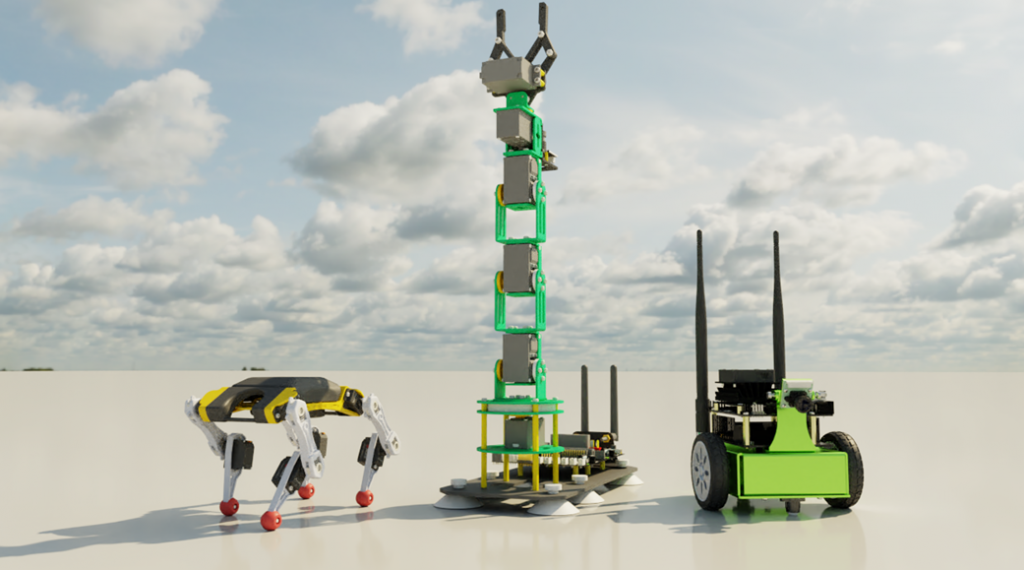
– Sim-to-Real and Real-to-Sim Transfer for Whole-Body Control of Mobile Platforms and Manipulators
– Adaptive Control and Online System Identification
– Hybrid Methods: Combining Classical and Adaptive Control with Machine Learning
– World Models and System Identification for Sim-to-Real Gap Reduction
– Data Augmentation, Domain Randomization, and Benchmarking for Sim-to-Real
– Foundation Models and Large-Scale Pretraining for Robotics
– Transfer and Continuous Learning for Interaction Control
– Theoretical Guarantees, Safety, and Robustness in Sim-to-Real
– Iterative Co-Improvement of World Models and Controllers / Policies
– Data-Driven Modeling and Hybrid Control Architectures
– World Models for Synthetic Robot Data Generation
In addition to research papers, we also welcome videos and presentations on relevant topics.
All submissions will undergo a rigorous peer review, with at least two high-quality reviews per paper. Selected papers will be presented as posters at the workshop, and outstanding contributions will be selected for presentations.
To recognize excellence, we are introducing a PAL funded Best Paper Award.
More information about the workshop and its programme: https://sim2realgap.github.io/sim2real-and-control-workshop-iros2026/
Scientific contact at ISIR: Dario Sanalitro, postdoctoral researcher
Published on 15/06/2026