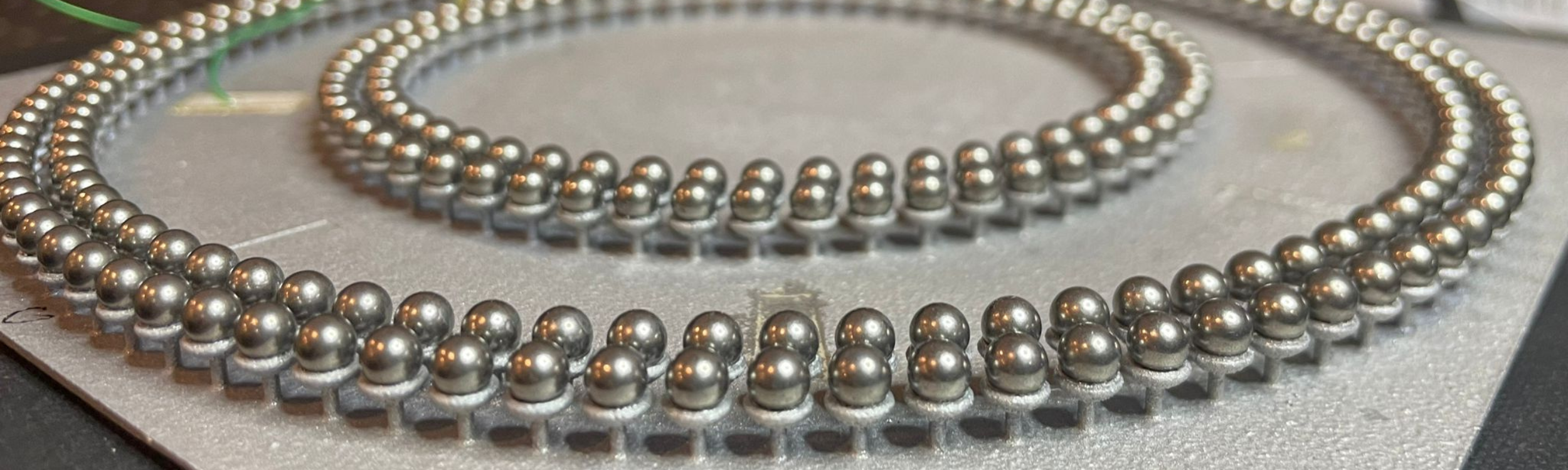
The Haptivance project aims to create a new generation of tactile surfaces capable of producing sensations of force and movement directly under the finger. Based on research conducted at ISIR, it draws on research in haptics and acoustic metamaterials to overcome the limitations of current tactile technologies.
This start-up project, winner of the Grand Prix in the 2025 edition of the French government’s innovation competitions, is supported by several programmes: the PUI Alliance Sorbonne Université support programme, the MyStartUp programme, and Bpifrance’s i-PhD scheme. The Haptivance project also receives support from several partners, including ISIR, CNRS Sciences Informatiques and CNRS Innovation, SATT Lutech for technology development and maturation, and AP-HP, via its Innovation Hub and the BOPEx third place, for the testing and co-design phases with healthcare professionals.
A shared observation: haptic feedback still lacks information
Today, haptic feedback is ubiquitous, from smartphones to industrial and medical interfaces. However, existing technologies rely mainly on global vibrations, which are impossible to locate precisely on a surface and incapable of exerting a net force on the finger.
This limitation greatly reduces the value of haptic feedback in situations where precision is critical, such as robotic surgery, driving, or certain accessibility devices. In these contexts, users are often forced to look at the screen to confirm their actions, which increases cognitive load and the risk of error.
In hospitals, interfaces still rely heavily on mechanical buttons, which are difficult to clean and subject to rapid wear and tear. Smooth touchscreens are better suited to hygiene requirements, but still lack tactile feedback, forcing caregivers to visually check each of their actions.
Structuring vibrations to enrich touch
Haptivance offers an approach based on acoustic metamaterials, originally developed in Thomas Daunizeau’s thesis research at ISIR. The aim is to structure the propagation of vibrations on the surface of a screen in order to localise touch and generate directional sensations, comparable to those produced by buttons or physical reliefs, while maintaining a completely smooth surface.
On a scientific level, the project seeks to control the propagation of progressive ultrasonic waves on the surface in order to create a force that can be felt under the finger by making the surface itself resonate, without any external mechanical actuation. One of the major challenges lies in the dimensioning of metamaterials to obtain a homogeneous force across the entire surface, as well as in the study of the most relevant haptic sensations in relation to the visual display and the position of the finger in real time.
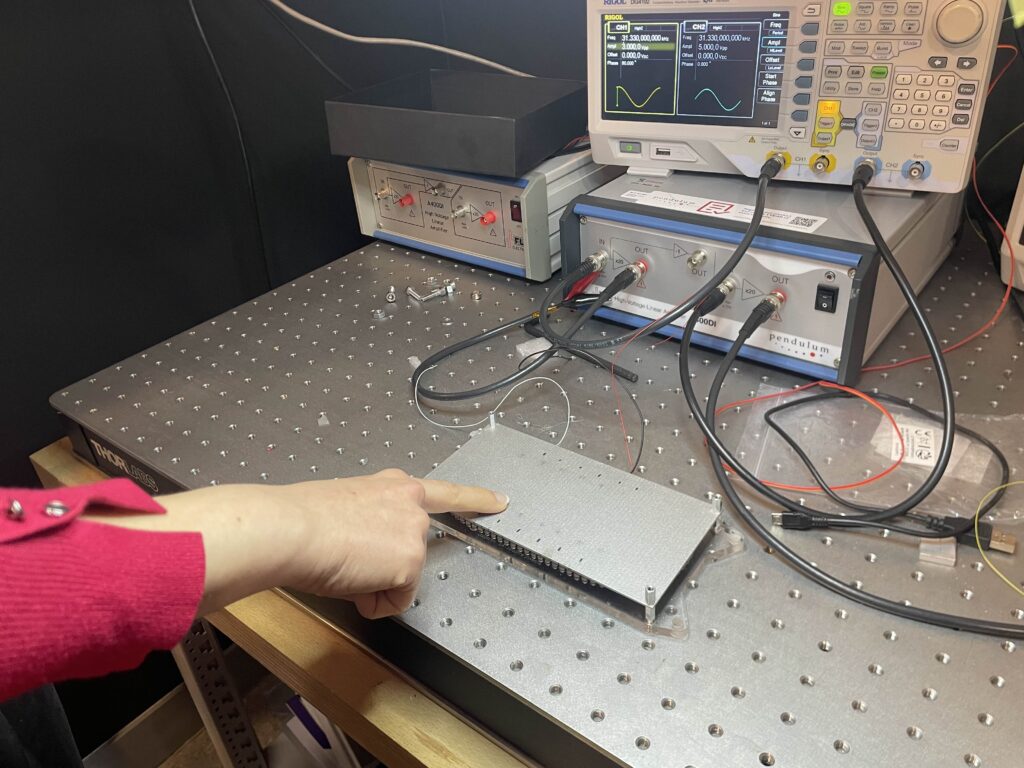
The main objective of the project for the coming year is to develop a functional demonstrator capable of producing localised and directional tactile feedback on an interactive surface. This demonstrator should enable users to feel buttons, edges, clicks, movements or finger guidance on touch screens.
Initial experimental results have already confirmed the possibility of generating progressive waves on a surface, creating a perceptible movement under the finger. The project now aims to extend and amplify this effect in a stable and effective manner, in order to enable multi-touch interactions such as clicks, directional swipes or continuous guidance.
Ultimately, Haptivance aims to offer industrialisable technology that can be integrated by screen manufacturers.
Targeted applications, particularly in hospitals
The main target applications are in hospitals, particularly surgical interfaces, monitors and imaging systems in operating theatres, medical devices in intensive care units and robotic teleoperation interfaces. In these contexts, rich and localised tactile feedback would reduce the visual attention required for interaction, improve the precision of movements and enhance safety of use, while facilitating the cleaning and sterilisation of surfaces.
Other contexts that are sensitive to visual load are also concerned, such as driving, where fully tactile dashboards could become safer thanks to informative haptic feedback. More broadly, this technology aims to enrich the user experience and improve accessibility for people with disabilities.
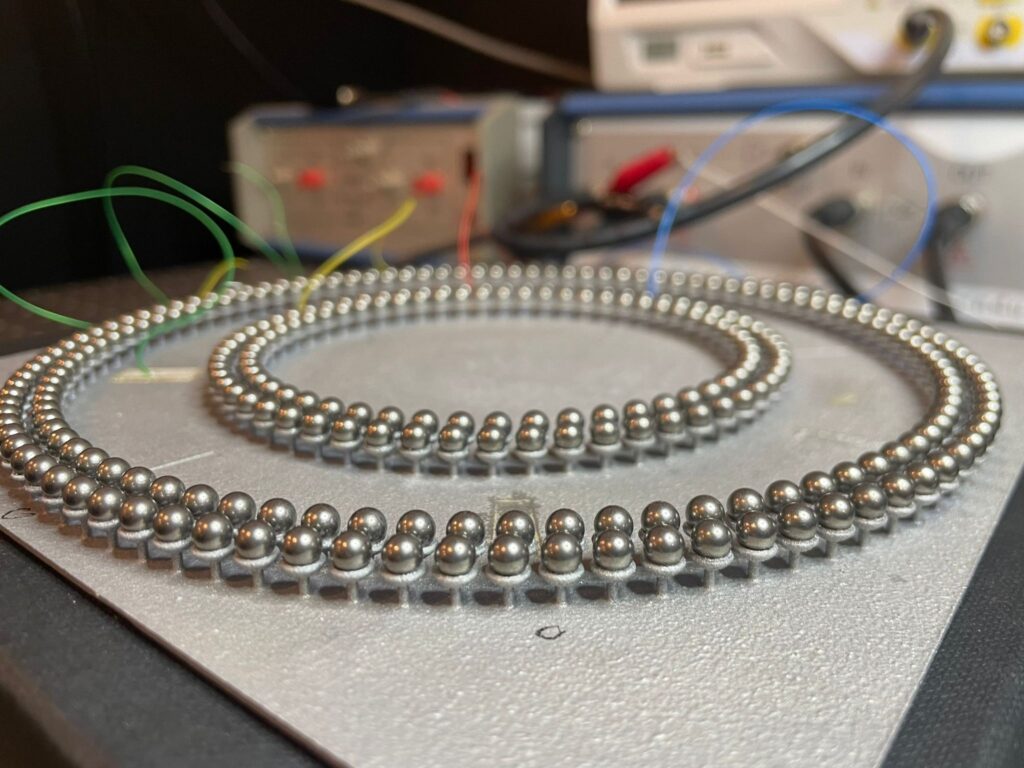
Haptivance originated from Thomas Daunizeau’s thesis work carried out at ISIR and draws on the expertise of several researchers at the laboratory in the fields of haptics, human-machine interaction and robotics, notably Sinan Haliyo and David Gueorguiev. The project also incorporates contributions from Maxime Rouillard on modelling and prototyping aspects. The project thus combines expertise in tactile perception, vibration modelling and interactive interface design.
The project was recognised in the France 2030 programme’s innovation competitions, which rewards young scientists with a business creation project based on their work, for which Inès Lacôte, a former researcher at ISIR, received the i-PhD Grand Prize.
With its strong multidisciplinary dimension, the project illustrates ISIR’s approach, which aims to foster innovation at the interface between fundamental research and practical applications in response to major technological and societal challenges.
Scientific contact: Inès Lacôte, former postdoctoral researcher at ISIR
Published on 02/02/2026